As an Amazon Associate I earn from qualifying purchases. This post may contain affiliate links. If you buy through them, we may earn a small commission at no extra cost to you.
Okay okay okay I know I said I was going to keep this one short. But honestly this question comes up all the time in gyms.
Do you actually need a lifting belt?
You see someone in the gym squatting with one and suddenly you think… wait… should I be using one too?
Or maybe you’re the opposite.
You see someone wearing a lifting belt to curl dumbbells and you’re thinking mate what are you doing.
So let’s break it down properly.
And not in some ultra scientific robotic way. Just real world gym experience.
Because I’ve been around sport and training for years. I’m an avid gym goer and hockey player and I’ve been involved in sport for about 12 years now. Football, hockey, gym training, random attempts at running… the whole lot.
And if I’m being honest I’ve also had my fair share of injuries.
Both shoulders dislocated several times. Long lasting knee issues. Plenty of physio visits. Plenty of moments where you’re like okay cool… I’m finally back in the gym again… let’s try not to ruin this again.
So over time I’ve learned something really important.
Using the right equipment at the right time can be a serious 👏GAME👏CHAN👏GER.
Foam rollers. Resistance bands. Proper warm ups. And yes sometimes a lifting belt.
But here’s the thing.
A lifting belt is not magic.
And most people either use them too early… or completely wrong.
Let’s clear it up.
What a Lifting Belt Actually Does
First thing first.
A lifting belt does not magically lift the weight for you.
And it does not replace your core muscles.
What it actually does is help you create more intra abdominal pressure.
That sounds fancy but basically it means this.
When you brace your core properly and push your stomach against the belt, your torso becomes much more stable.
That stability helps protect your spine when you’re lifting heavy.
Think of it like turning your torso into a strong pressurised cylinder.
Without a belt
You brace your core
With a belt
You brace your core against something solid
Which often makes the brace stronger.
That extra stability can make a big difference during heavy lifts like:
- Squats
- Deadlifts
- Overhead press
- Heavy barbell rows
Especially when the weight starts getting serious.
When a Lifting Belt Actually Helps
Alright so when does it make sense to use one?
Generally speaking, lifting belts start becoming useful when you’re doing heavy compound lifts.
Usually that means:
- Low rep strength training
- Sets of 1 to 5 reps
- Heavy squats
- Heavy deadlifts
- Powerlifting style training
When the weight gets heavy enough, your core has to work extremely hard to stabilise your spine.
This is where a belt can help.
Not because it replaces your core.
But because it helps your core brace more effectively.
A lot of lifters also find they can lift slightly heavier with a belt.
Sometimes around 5 to 10 percent more.
Which is pretty amazinnngg when you’re trying to push your strength numbers up.

When You Probably Do Not Need One
Now here’s the part that people sometimes do not like hearing.
Most beginners do not need a lifting belt.
If you are:
- Learning technique
- Lifting moderate weights
- Doing higher rep training
- Still building your base strength
Then your focus should be on developing a strong natural brace.
This means learning how to properly engage your core.
In fact using a belt too early can sometimes stop you from learning that skill properly.
Wait wait wait just bare with me on this.
The goal early on is to build raw stability.
Once you can squat and deadlift with good form and strong core engagement, that is when belts can start making more sense.
Do Lifting Belts Make Your Core Weaker?
This is probably the biggest myth around lifting belts.
People say things like:
“If you use a belt your core will get weaker.”
But that’s not really how it works.
Research actually shows that your core muscles can still activate strongly while wearing a belt.
In some cases the belt even helps people brace harder.
The real issue is how people use them.
If someone wears a belt for every single exercise including:
- Bicep curls
- Light machine work
- Warm up sets
Then yeah that is probably unnecessary.
But using a belt for heavy compound lifts is a totally different story.
When Most Lifters Start Using a Belt
There is no exact rule here.
But a rough guideline many strength coaches mention is something like this.
You might consider a lifting belt when you are around:
- Squatting about 1.5 times your body weight
- Deadlifting around 2 times your body weight
At this point the loads are usually heavy enough that extra stability can really help.
For some people that might take a year.
For others maybe longer.
And honestly that’s totally fine.
Consistency beats rushing.
Believe me I’ve been through the cycle of stopping and starting with training many times because of injuries. Shoulders popping out. Knees acting up. Weeks stuck doing rehab exercises with resistance bands.
Not fun.
So if you can add tools that help you train safer and stay consistent, that is huge.
Choosing a Good Lifting Belt
If you do decide to try one, there are a few types to consider.
These are common options you will see on sites like Amazon.
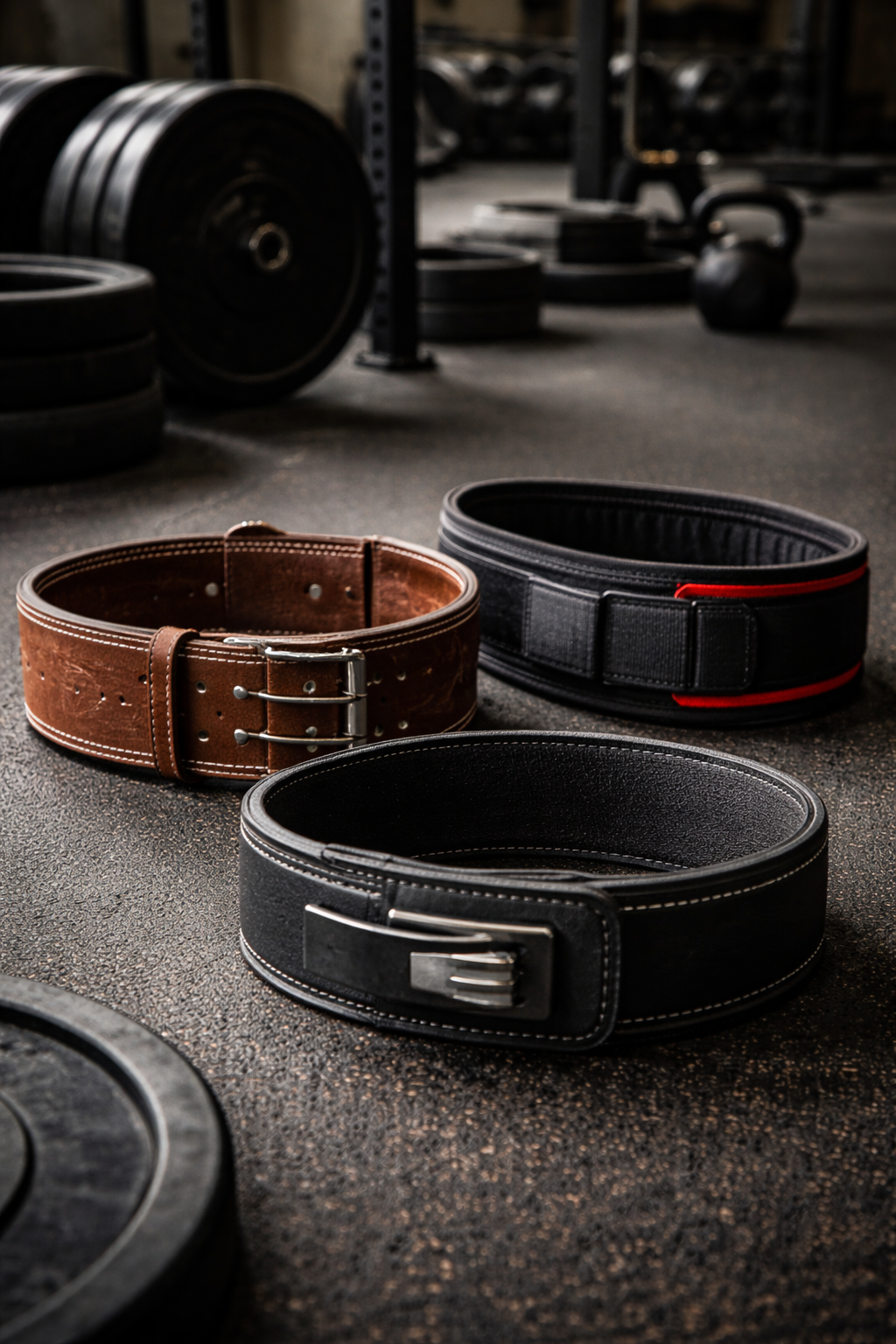
Leather Powerlifting Belts
These are thick, sturdy and built for serious strength training.
They usually come in:
- Single prong buckle
- Double prong buckle
They provide excellent support for heavy squats and deadlifts.
Lever Lifting Belts
These are very popular with powerlifters.
They use a lever mechanism instead of a buckle which makes them super quick to tighten and release.
Once you set the size it stays consistent every time.
Very satisfying to use honestly.
Nylon Lifting Belts
These are lighter and more flexible.
Many people prefer them for functional training or CrossFit style workouts.
They are not as rigid as leather belts but still provide support.
Other Equipment That Helps Prevent Injury
This might sound slightly off topic but it’s honestly related.
One thing years of sport and injuries has taught me is that support equipment matters. You can find out more about this on more article over here.
Some simple things that have helped me stay in the gym longer include:
Foam Rollers
A good foam roller can be incredddible for loosening tight muscles.
Especially after leg day or hockey training.
Resistance Bands
Great for:
- Warm ups
- Shoulder stability work
- Glute activation
- Rehab exercises
My physio has had me using these more times than I can count.
Lifting Straps
If your grip gives out before your back during deadlifts, straps can help extend your working sets.
Which can make back training much more effective.
Final Thoughts
So.
Do you actually need a lifting belt?
For most beginners the honest answer is probably not yet.
Focus on:
- Learning good technique
- Building core strength
- Progressively increasing your lifts
But once you start pushing heavier weights, a lifting belt can absolutely be a helpful tool.
Not a shortcut.
Not a cheat.
Just another piece of equipment that can support your training when used properly.
And if you’ve ever had injuries like me you’ll know this feeling.
Staying healthy and consistent in the gym is far more important than chasing ego lifts.
Slow progress.
Smart equipment choices.
And showing up week after week.
That’s where the real results happen.
Fitter Daily is supported by its readers and participates in affiliate marketing programs, including Amazon Associates. We may earn commissions from qualifying purchases made through links on this site, at no additional cost to you.
Some images featured on Fitter Daily are digitally generated concept designs created for inspirational purposes. These visuals may not represent physical products or real life spaces exactly as shown.
All content is provided for informational and inspirational purposes only. While we strive for accuracy, we make no guarantees regarding product availability, pricing, specifications, or suitability. Please verify all product details directly with the retailer before purchasing.
Leave a Reply